Mazda Luce Third Generation Legato (1977)
Introduced in October 1977, the third-generation Luce Legato moved Mazda’s Luce further upmarket. The LA4 family combined sedan and hardtop bodies with rotary and piston engines, while later wagon and van versions followed a longer production chronology.
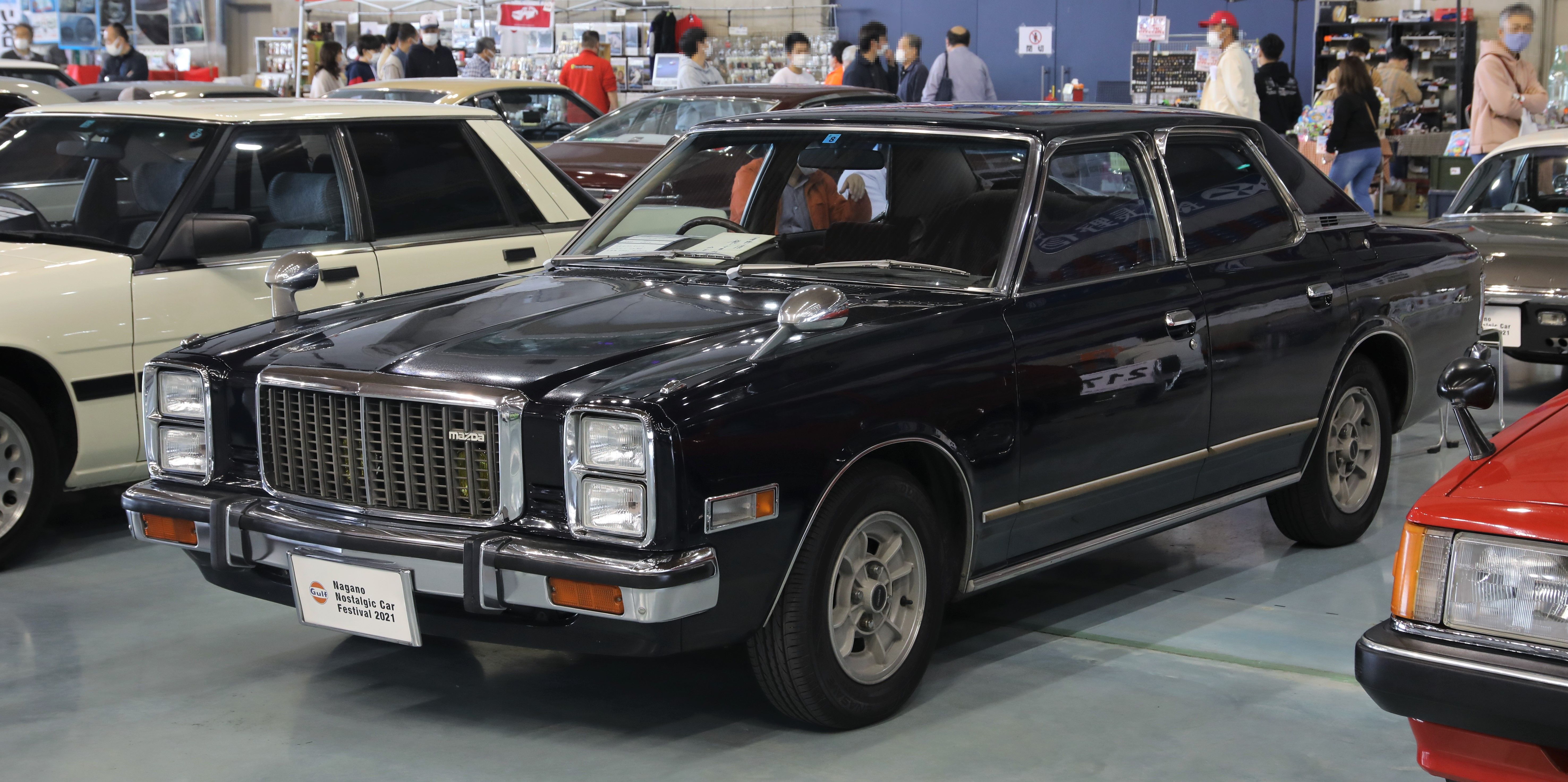
The Luce Legato generation
Mazda introduced the third-generation Luce as the Luce Legato in October 1977. Mazda’s corporate chronology also identifies it as the Mazda 929L. The date denotes the Japanese introduction, rather than a universal export model year. It followed the second-generation Luce. Mazda’s corporate history confirms its generation and launch month.
Known as the LA4 series, it was manufactured in Hiroshima, Japan. Its front-engine, rear-wheel-drive layout accompanied formal styling, with vertically stacked headlights on early cars. The sedan and four-door hardtop were followed by wagon and van derivatives. A revised grille and horizontal headlights arrived in 1979. Autocade’s generation history documents these design and production distinctions.
Body styles and positioning
Mazda’s retrospective describes the Legato as an upper-end addition to the Luce range, developed around refinement and a more prestigious presentation. Its launch rotary range offered a four-door sedan and a four-door pillared hardtop—the manufacturer’s terminology, which should not be confused with a two-door coupé or a pillarless body. The 13B-powered Limited occupied the top of this range. Mazda’s rotary-vehicle history, reproduced in this archive, describes the launch configuration.
Engines and market distinctions
The Japanese launch rotary choices were the 12A and 13B. Mazda’s retrospective lists five-speed manual and three-speed automatic transmissions for its initial Japanese-specification 13B four-door hardtop. These details describe that configuration rather than every LA4. Mazda’s rotary-vehicle history provides the specification context.
Across the wider family, engine choices also included 1.8- and 2.0-litre petrol fours, a 2.0-litre LPG four and a 2.2-litre diesel. Availability depended on version and period. Export names included 929 and RX-9; an export badge alone does not establish Japanese equipment or engine specification. Autocade records the broader engine and naming coverage.
Chronology and production boundaries
Mazda’s Japanese chronology records the following developments:
- October 1977: introduction of the Luce Legato.
- July 1978: seven additional versions, including a 2000 automatic.
- September 1980: diesel and EGI fuel-injected versions added.
- October 1981: introduction of the fourth-generation Luce.
These are calendar dates in the manufacturer’s chronology. The 1981 generation change must not be treated as the end of every LA4 body style. Mazda separately records a Luce van update in January 1982 and the van’s production ending in August 1987. Mazda’s Luce timeline supplies these dates.
Autocade gives 1988 as the wagon endpoint. That broader wagon date and Mazda’s Japanese van date are retained separately; they do not establish one worldwide end date for all estate and commercial versions. Autocade.
Historical significance
The Legato illustrates Mazda’s use of rotary engines in an upscale four-door range alongside conventional powertrains. Its position between the earlier Luce and the 1981 successor also shows why generation histories need separate body-style timelines: the principal passenger-car replacement did not coincide with the disappearance of the utility derivatives. Mazda’s rotary history and Luce chronology document those complementary histories.
Sources and image credit
- Mazda Newsroom — Luce chronology, including the October 1977 launch and subsequent van milestones.
- Mazda — Corporate history, 1920–1979; third-generation Luce Legato / Mazda 929L introduction.
- Mazda — An Album of Mazda’s Rotary Engine Vehicles; Luce Legato entry, PDF page 2, archived copy.
- Autocade — Mazda Luce Legato; LA4 design, engine range, manufacturing location and body-style chronology.
- TTTNIS — 1977 Mazda Luce Legato photograph, Wikimedia Commons; CC0 1.0 Universal.
