BMW 3 Series E21 (1975–1983)
The first 3 Series, a two-door rear-wheel-drive model offered with four- and six-cylinder engines.
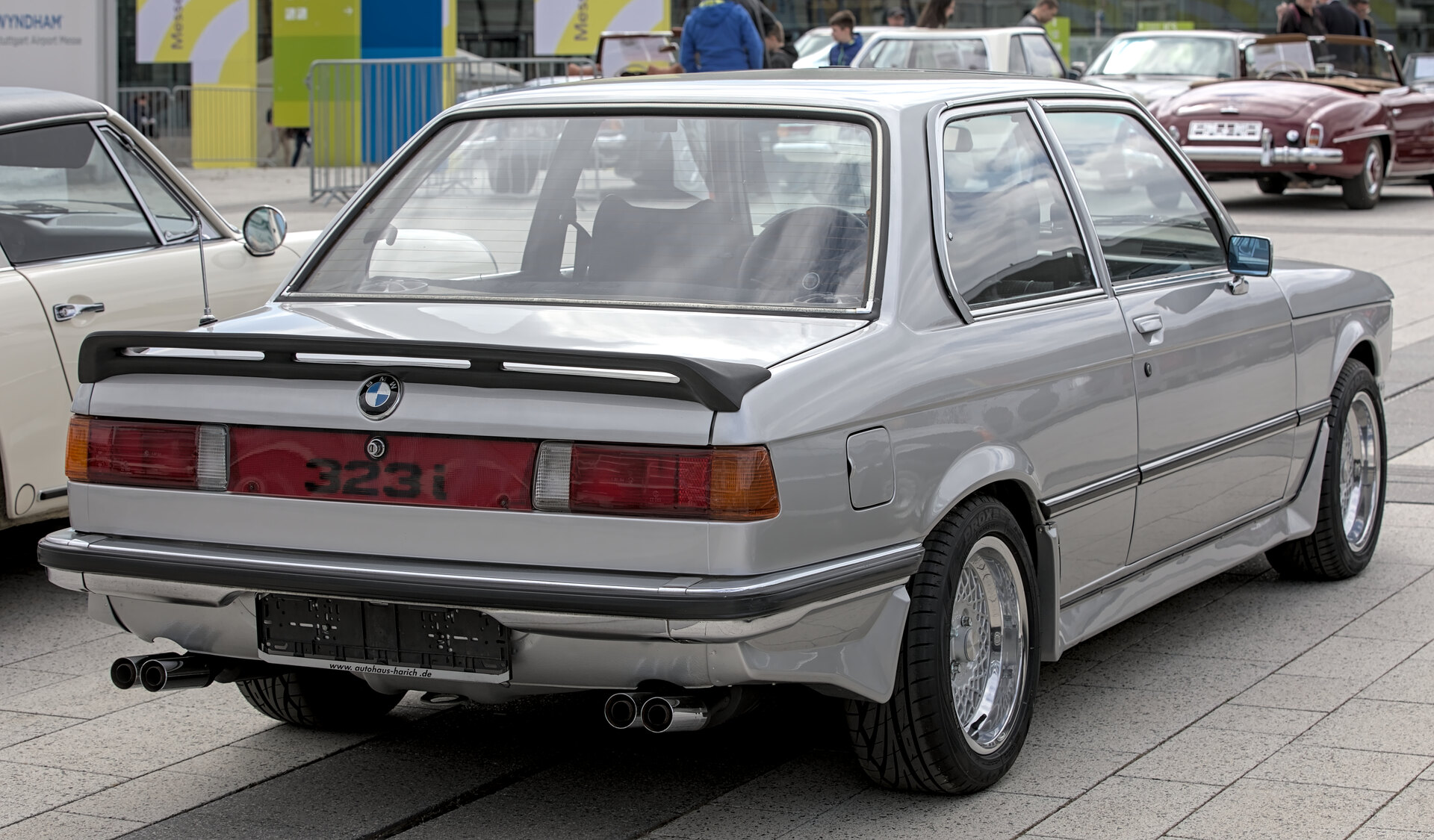
Overview
The E21 was the first generation of the BMW 3 Series, produced from 1975 to 1983. BMW manufactured it as a two-door saloon with rear-wheel drive; its engine offerings across that period included four-cylinder units and, from 1977, straight-sixes. It replaced the 02 Series. The E30 successor arrived in 1982 while E21 production continued into 1983, so the two generations overlapped. These generation dates are recorded in BMW’s historical overview.
The E21 retained a longitudinal front engine. Its shape combined a low, forward-leaning nose with the twin-kidney grille, a strong shoulder line and the Hofmeister kink at the base of the rear pillar. Inside, the centre section of the dashboard was angled towards the driver, an arrangement that became a recurring BMW design feature.
Engines and chassis
The 1975 launch range comprised the four-cylinder 316, 318, 320 and fuel-injected 320i, with engine capacities spanning 1.6–2.0 litres. The 316, 318 and 320 used carburettors. This launch range is described in BMW’s 45-year retrospective, but the account does not establish country-by-country availability. Market coverage remains unspecified here; the list should not be read as a range offered in every market or throughout production.
In 1977, BMW added the straight-six 320/6 and 323i, using a carburettor and fuel injection respectively. The 315 joined later, in 1981, as an entry-level model. These additions are separate from the 1975 launch range and its 1.6–2.0-litre capacity span.
A carburettor mixes fuel with incoming air; fuel injection meters fuel through injectors. These terms describe the fuel-delivery system, while four-cylinder and straight-six describe the number and arrangement of cylinders.
The 323i’s twin exhaust outlets provided a visual distinction. The E21 used independent suspension, rack-and-pinion steering and rear-wheel drive.
Body and development
BMW manufactured the E21 solely as a two-door saloon. Detail revisions during its production life included changes to exterior trim and interior equipment.
Baur TopCabriolet conversion
Stuttgart coachbuilder Baur converted the BMW-built saloon into the TopCabriolet. The conversion retained a fixed window surround and central roll bar, with a removable roof panel and folding rear hood. This was a Baur conversion rather than a separate BMW factory convertible body style.
BMW Group Classic’s dedicated Topcabriolet entry describes Baur developing it for BMW and confirms the combination of hard and fabric roof sections with retained side sections and a roll bar. However, the precise terms of the previously stated official approval have not been verified.
The previously stated 1978 start of the conversion offering also remains unconfirmed: the dedicated BMW Group Classic entry lists production as 1977–1982 without distinguishing development, presentation and customer availability. The 1978 milestone is therefore retained below as provisional.
Key milestones
- 1975: The E21 is introduced as the first BMW 3 Series.
- 1977: Six-cylinder 320/6 and 323i models join the range.
- 1978 — provisional: Previously stated start of Baur’s TopCabriolet offering; this customer-availability date remains unverified. BMW Group Classic instead lists a 1977–1982 production period for the conversion.
- 1981: The 315 becomes the new entry-level version.
- 1982: The second-generation E30 is introduced while the E21 remains in production.
- 1983: E21 production ends, completing the overlap with the E30.