Porsche
Porsche's development from its 1931 engineering office to sports-car production in 1948, the 356 and 911 families, and a broader range of mid-engined sports cars, SUVs, four-door models and electric cars.
Historical overview
Origins: engineering office and first sports cars
Ferdinand Porsche established an engineering office in Stuttgart in 1931, undertaking development work for other manufacturers. This marks the company’s engineering origins; production of sports cars bearing the Porsche name followed after the Second World War.
The first was the 356 No. 1 Roadster, which received its general operating permit on 8 June 1948 in Austria. This prototype used a mid-engined layout, with its engine ahead of the rear axle. The subsequent production family used a different arrangement: the rear-engined 356/2 entered production in Gmünd in the second half of 1948, with the engine behind the rear axle.
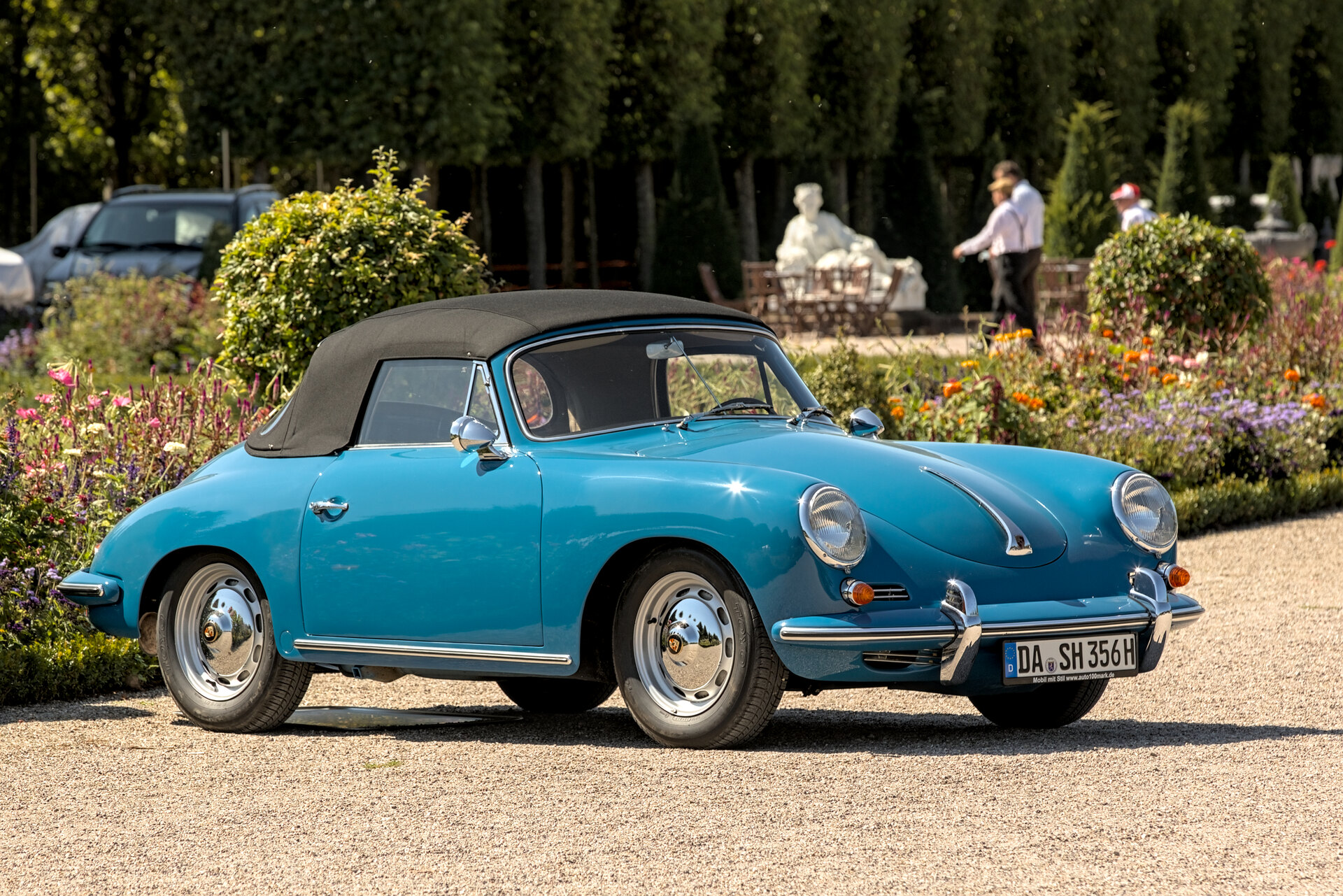
Manufacturing subsequently moved to Stuttgart-Zuffenhausen, where the first German-built 356 was completed on 6 April 1950. The 356 family remained in production until 1965.
Sports-car development: different engine layouts
The 911 succeeded the 356 during the 1960s and became Porsche’s defining sports-car line. Its rear-mounted flat-six engine has six cylinders arranged horizontally in two opposing banks of three. The model evolved through successive generations and competition use, including racing and rallying.
Porsche also pursued other layouts. The two-seat 914, developed with Volkswagen, placed its engine ahead of the rear axle. The water-cooled 924, 944, 968 and 928 instead used front-mounted engines and a rear-mounted transmission. This is Porsche’s transaxle arrangement: the gearbox and differential are grouped at the rear, connected to the engine by a driveshaft. The 924, 944 and 968 formed a four-cylinder lineage; the 928 was a V8 grand tourer produced from 1977 to 1995.
Range expansion: Boxster, Cayman and beyond
The mid-engined Boxster roadster began as a concept shown at Detroit in 1993. Its production version launched in Europe in 1996, followed by the United States in 1997. The related mid-engined Cayman coupe followed separately in 2005, with the Cayman S exhibited at that year’s Frankfurt motor show. These are concept, market-launch and public-debut milestones, rather than a shared introduction date for the two families.
Porsche also expanded beyond two-door sports cars with the Cayenne sport-utility vehicle, the Panamera four-door model and the compact Macan SUV. The fully electric Taycan had its world premiere on 4 September 2019, and production began in Zuffenhausen that year.
Notable model lines
This selective overview complements the 911 entry above.
- 356: Porsche’s first production sports-car family, built from 1948 to 1965; the rear-engined production cars followed the mid-engined No. 1 Roadster prototype.
- 914: A mid-engined two-seat sports car developed with Volkswagen.
- 924, 944 and 968: The front-engined four-cylinder transaxle lineage, with the gearbox and differential at the rear.
- 928: A V8-powered front-engined grand tourer produced from 1977 to 1995.
- Boxster: The mid-engined roadster family, previewed by a 1993 concept and launched in production form in Europe in 1996 and the United States in 1997.
- Cayman: The related mid-engined coupe family introduced in 2005, when the Cayman S appeared at the Frankfurt motor show.
- Cayenne: The sport-utility vehicle that broadened Porsche’s range beyond two-door sports cars.
- Panamera: A four-door model extending the range into sports saloons.
- Macan: A compact SUV within Porsche’s expanded model range.
- Taycan: A fully electric four-door sports saloon, unveiled on 4 September 2019.
Historical references
- Porsche Engineering: engineering-office foundation in 1931, the 1948 No. 1 Roadster and rear-engined 356/2 production.
- Porsche Newsroom: Austrian 356 production, the move to Zuffenhausen in 1950 and the end of 356 production in 1965.
- Porsche AG heritage timeline: 911 development and motorsport, Volkswagen collaboration on the 914, Cayman S debut and range expansion.
- Porsche Newsroom: transaxle layout and the 924, 944, 968 and 928 families.
- Porsche Christophorus: the front-engined 928 grand tourer, its 1977 premiere and production through 1995.
- Porsche Cars North America: the 1993 Boxster concept and production-model launches in Europe in 1996 and the United States in 1997.
- Porsche Christophorus: mid-engined 914, Boxster and Cayman history, including the Cayman’s 2005 introduction.
- Porsche Newsroom: Taycan world-premiere announcement, 4 September 2019.
Browse related records
1 records
Porsche 911
An introduction to the Porsche 911's debut and early engineering, with catalogue coverage focused on the original generation produced in 1964–1973.
Model
No matching records.