Mazda RX-8 Original Generation Sport Prestige Limited II Twin-Rotor Engine
The Sport Prestige Limited II used the RENESIS twin-rotor engine in two Japanese specifications: 250 PS with the Type S-based six-speed manual and 210 PS with the Type E-based four-speed automatic.
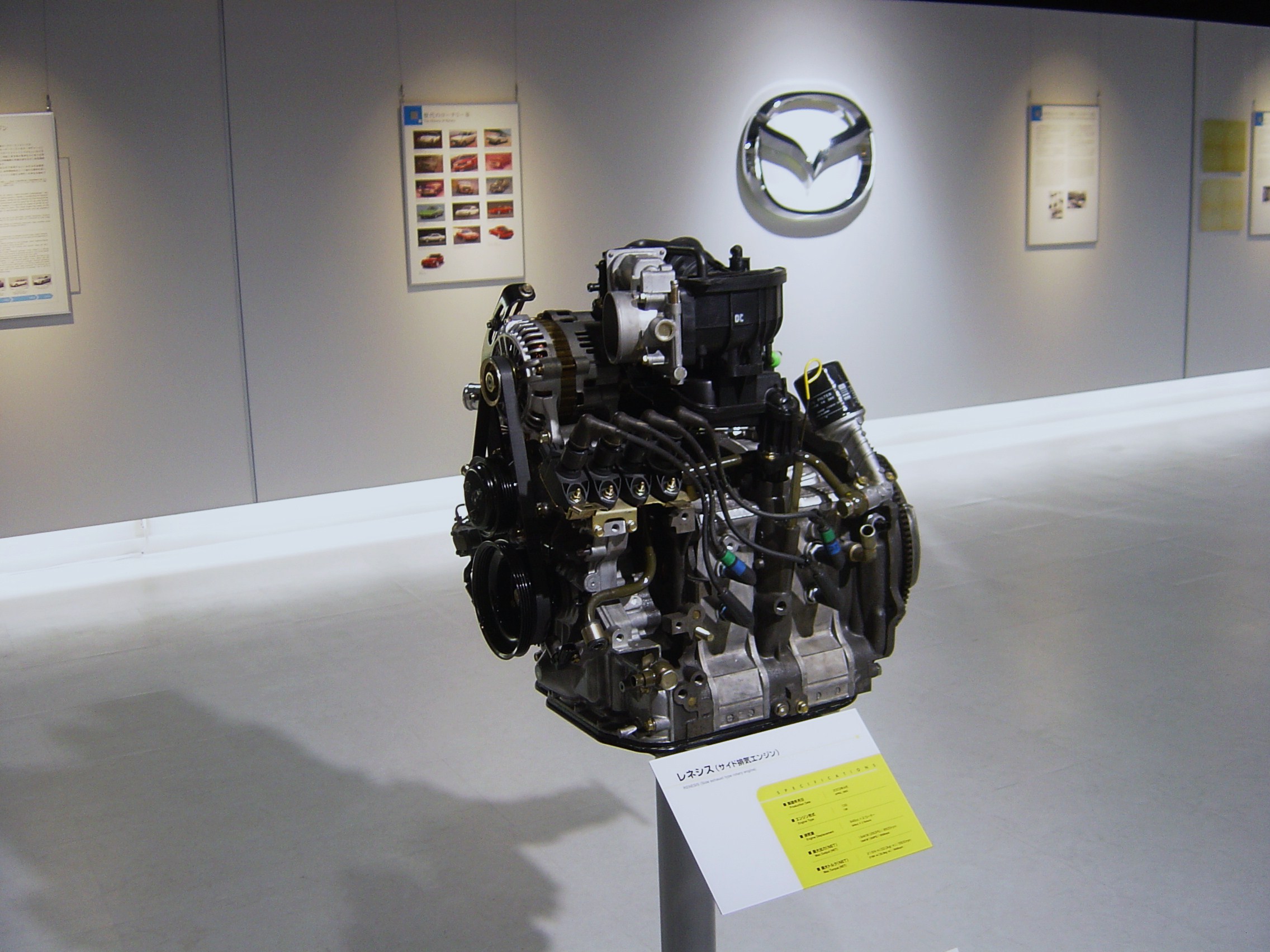
Engine identity and application
The Sport Prestige Limited II offered two Japanese-market RENESIS powertrain specifications: a Type S-based six-speed manual rated at 250 PS, and a Type E-based four-speed Activematic automatic rated at 210 PS. The special-edition name did not denote a single shared output rating. Mazda’s Japanese specification table.
RENESIS was a naturally aspirated rotary engine with two 654 cc rotors, giving a nominal displacement of 1,308 cc. This record covers its application within the special edition, rather than the entire RX-8 engine family. Mazda’s RENESIS introduction.
Design and engineering
RENESIS combined side exhaust ports with a Sequential Dynamic Air Intake System. Mazda described these features as supporting naturally aspirated performance while improving fuel economy and emissions relative to earlier rotary engines. These were engine-family developments, not a bespoke design introduced for the special edition. RENESIS production and engineering announcement.
The RX-8 launch documentation identifies a water-cooled twin-rotor engine with side intake and exhaust ports and electronic throttle control. Its compact size allowed the principal engine mass to sit behind the front-wheel centre line. This front-midship arrangement supported the packaging of a four-door, four-seat sports car. Mazda’s RX-8 engineering description.
Manual and automatic specifications
- Type S-based manual: six-speed manual transmission and a published Japanese rating of 250 PS.
- Type E-based automatic: four-speed Activematic transmission and a published Japanese rating of 210 PS.
These pairings are explicitly listed in the October 2005 special-edition announcement. They should not be replaced by export-market horsepower figures or specifications from later RX-8 revisions. PS is the unit used in Mazda’s Japanese table. Edition specifications.
For comparison, Mazda’s April 2003 Japanese launch specification listed the Type S at 184 kW (250 PS) at 8,500 rpm, with 216 N·m at 5,500 rpm; the Type E was listed at 154 kW (210 PS) at 7,200 rpm, with 222 N·m at 5,000 rpm. Those are dated base-grade specifications. The 2005 edition table confirms the power ratings and transmission pairings but does not repeat torque or engine-speed figures. Original Japanese-market specification table.
Manufacturing and chronology
Mazda began RENESIS engine production at its Ujina plant in Hiroshima, Japan, on 29 January 2003. This establishes the engine family’s manufacturing origin; it is not the assembly-start date of the later Sport Prestige Limited II. Mazda’s production announcement.
The special edition was announced on 18 October 2005, with Japanese sales scheduled for mid-November 2005. The announcement does not establish an exact edition-specific production start, production end or engine total. Its calendar dates should not be converted into a worldwide model-year designation. Special-edition announcement.
Place in the RX-8 range
The Sport Prestige Limited II illustrates the use of two established rotary powertrain specifications within one special-edition identity. Its engine history therefore depends on retaining the distinction between the manual and automatic applications.
For the edition’s equipment and vehicle context, see the parent variant. The original RX-8 generation provides the wider chronology. The Japanese base-grade RENESIS record covers a separate application and its subsequent changes.
Sources and image credit
- Mazda: Sport Prestige Limited II Japanese announcement and specification table, 18 October 2005.
- Mazda: RENESIS manufacturing introduction and engine architecture, 29 January 2003.
- Mazda: RX-8 Japanese launch, engineering description and base-grade specifications, 9 April 2003.
- Taisyo: RENESIS engine at the Mazda Museum, 5 February 2005; Wikimedia Commons, CC BY-SA 3.0.

Browse related records
1 records
Mazda RX-8 Original Generation Sport Prestige Limited II Twin-Rotor Engine in 2005
The 2005 introduction of Japan’s RX-8 Sport Prestige Limited II, with separate manual and automatic configurations.
Years
No matching records.