Mazda Luce First Generation Rotary Coupe
Introduced in October 1969, the Luce Rotary Coupe combined a pillarless hardtop body with front-wheel drive and a dedicated twin-rotor engine. Mazda places it within the first-generation Luce lineage.
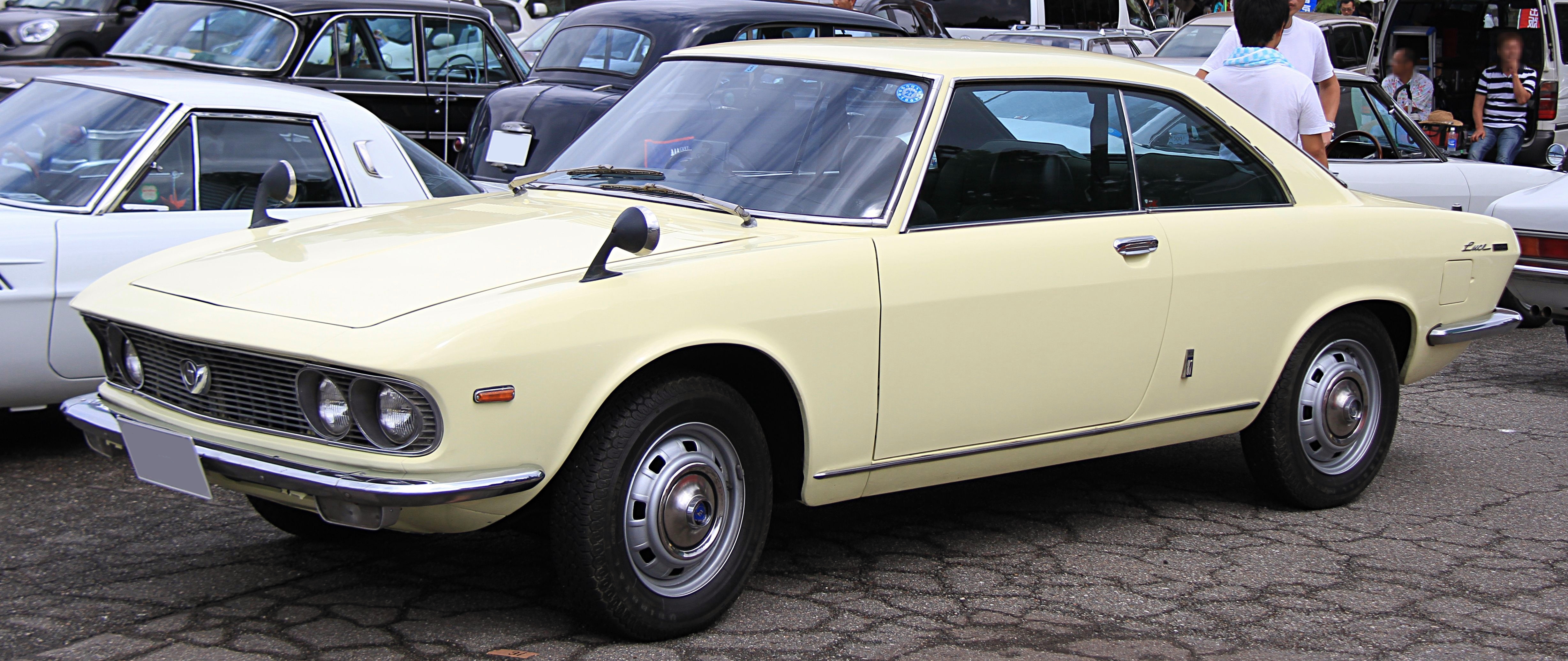
Luce Rotary Coupe
The Luce Rotary Coupe was Mazda’s luxury hardtop coupe introduced in October 1969. Its front-mounted rotary engine drove the front wheels, giving it a distinctive mechanical identity within the Luce range. Mazda’s corporate history also identifies it as the R130 Coupe. Mazda history.
This variant belongs beneath the first-generation Luce, following Mazda’s own lineage rather than treating its different engineering as a separate generation. The broader Luce model record provides the family context. Mazda’s Luce chronology.
Design and luxury positioning
The coupe combined the Luce family’s Italian-influenced styling with a pillarless side opening. Mazda’s retrospective describes a low beltline, expansive glass and a cabin that opened up when all four windows were lowered. Its account of a surviving example also records air conditioning and a four-speed manual gearbox; these observations should not be read as a complete specification for every grade. Mazda Australia retrospective.
In Japan, Mazda positioned the coupe as an expensive personal luxury car. Its historical account gives prices of ¥1.45–1.75 million and records displays in 35 major department stores as well as dealerships. The marketing name “Lord of the Road” reflected that prestige positioning. Mazda’s Luce history.
Rotary engine and front-wheel drive
The engine was the 13A twin-rotor unit, listed by Mazda as 655 cc per rotor, or 1,310 cc in total. This identifies the engine’s rotary chamber displacement, not a piston-engine equivalence. Mazda’s corporate chronology distinguishes it from the 491 cc × 2 10A used in the contemporary Familia Rotary Coupe. Mazda history.
Mazda credits the rotary engine’s compactness with enabling the front-engine, front-wheel-drive arrangement. Its Luce history quotes 126 PS and a maximum speed of 190 km/h; these are manufacturer historical figures rather than independently verified road-test results. Mazda’s Luce history.
Mazda’s later retrospective identifies the 13A as an engine used only in the Luce Rotary Coupe. The car therefore represents a distinctive application of rotary power to refinement and prestige. Mazda Australia retrospective.
Chronology and evidence limits
Mazda’s Japanese Luce lineage records the following calendar dates:
- October 1969: launch of the front-wheel-drive Luce Rotary Coupe.
- February 1970: an addition to the coupe range, without identifying the grade in that chronology.
- July 1970: production cessation.
- November 1972: introduction of the second-generation Luce Rotary and Luce AP series.
These dates describe events, not model-year designations. Mazda’s Luce chronology.
The production endpoint remains inconsistent across Mazda’s own publications: its 2019 Australian retrospective describes a production run exceeding two years. That conflicts with the Japanese chronology’s July 1970 entry. Neither source explains the discrepancy, so a definitive reconciled production span is not asserted here. Mazda Australia retrospective.
The cited histories establish the Japanese launch and market positioning but do not establish a specific assembly plant or a complete export-market specification. Production location, market-by-market equipment and production totals therefore remain unconfirmed in this record.
Sources and image credit
- Mazda Motor Corporation — Luce history
- Mazda Newsroom — Luce lineage chronology (Japanese)
- Mazda Motor Corporation — History, 1920–1979
- Dan Trent, Mazda Australia — 50th Anniversary Mazda Rotary Luce
- TTTNIS — Mazda Luce Rotary Coupe photograph, CC0 1.0

Browse related records
1 records
Mazda Luce First Generation Rotary Coupe 1310 cc Twin-Rotor Engine
The Luce Rotary Coupe's 13A combined two 655 cc rotor chambers with a Mazda-quoted output of 126 PS. Introduced in October 1969, it applied rotary power to Mazda's luxury hardtop coupe.
Engine
No matching records.