Volkswagen Golf
This model overview currently covers the Volkswagen Golf’s origins and first generation, beginning with the front-engined, front-wheel-drive hatchback’s production start in 1974.
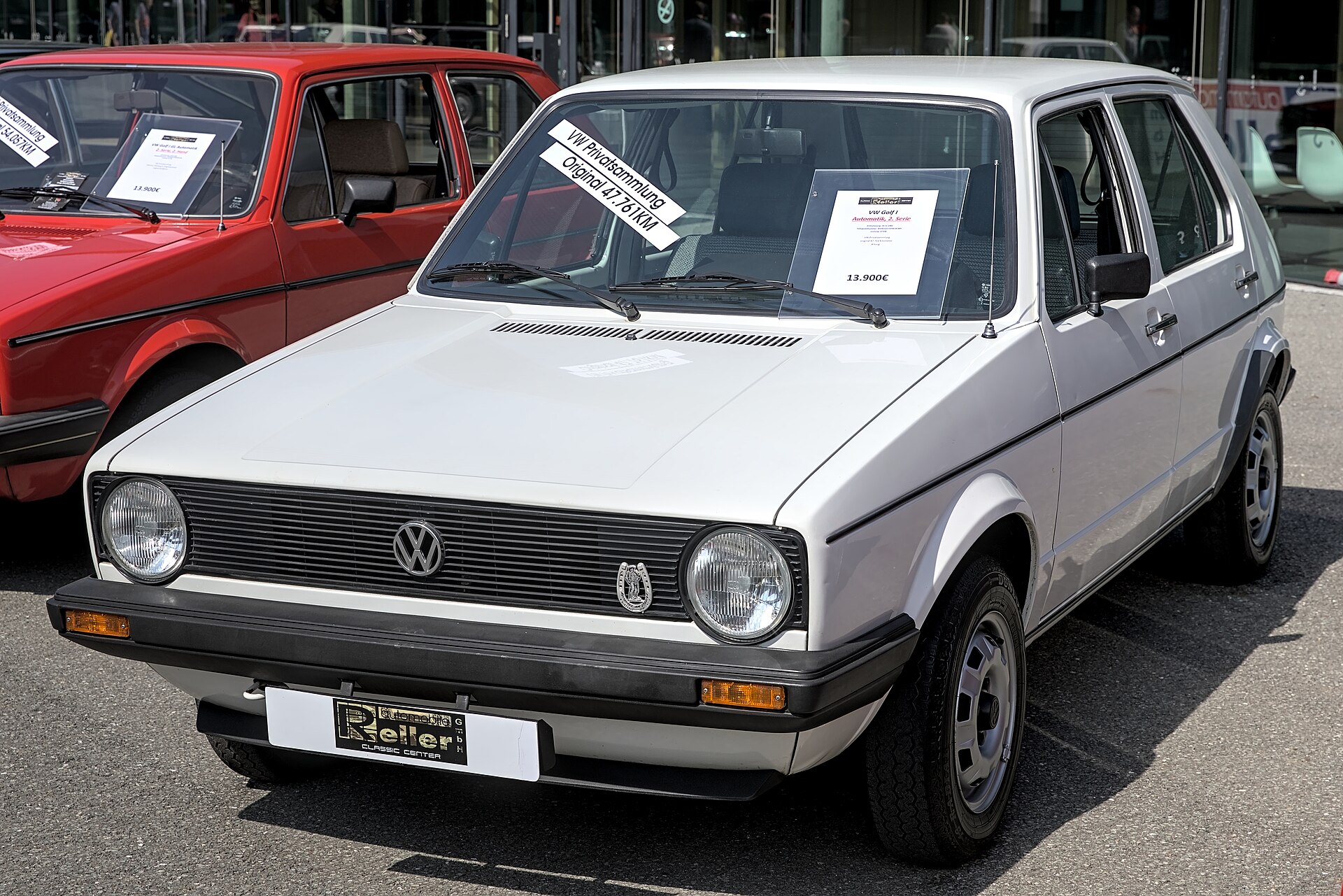
Overview
1974 production start and engineering layout
Volkswagen began series production of the Golf at Wolfsburg on 29 March 1974. The new model replaced the Volkswagen Beetle at the centre of the company’s passenger-car range, exchanging its predecessor’s rear-mounted, air-cooled engine for a transversely mounted, water-cooled engine driving the front wheels.
Giugiaro’s body design
Giorgetto Giugiaro designed the clear-edged hatchback body. Its large tailgate, folding rear seat and compact exterior gave the Golf a more flexible layout than a conventional small saloon, while three- and five-door versions broadened its usefulness.
Early range developments and production milestones
The range soon expanded beyond the original hatchbacks:
- 1976: The Golf GTI entered production, pairing the practical body with a fuel-injected engine and a sportier chassis. A diesel followed the same year.
- October 1976: Volkswagen had built one million Golfs.
- 1979: The Golf Cabriolet arrived.
Generations
This model overview currently covers the Golf’s origins and first generation.
First generation (Golf I / Mk1): mainstream German production, 1974–1983
Golf I and Mk1 refer to the same first generation. The first Golf established the model’s basic formula: a two-box hatchback with front-wheel drive, space-efficient packaging and a wide choice of engines and trim levels. Mainstream German production gave way to the Golf II in 1983, although first-generation derivatives remained in production for longer. The 1983 date therefore does not mark a worldwide end to first-generation production.