Toyota Land Cruiser
From the BJ of 1951 and the adoption of the Land Cruiser name in 1954 to the family's heavy-duty, station-wagon and light-duty branches.
Overview
Toyota launched the BJ four-wheel-drive vehicle in August 1951. Developed for Japan’s National Police Reserve but not selected, it demonstrated its capability by climbing to Mount Fuji’s sixth station. Toyota adopted the Land Cruiser name in 1954. Toyota’s historical account records these origins.
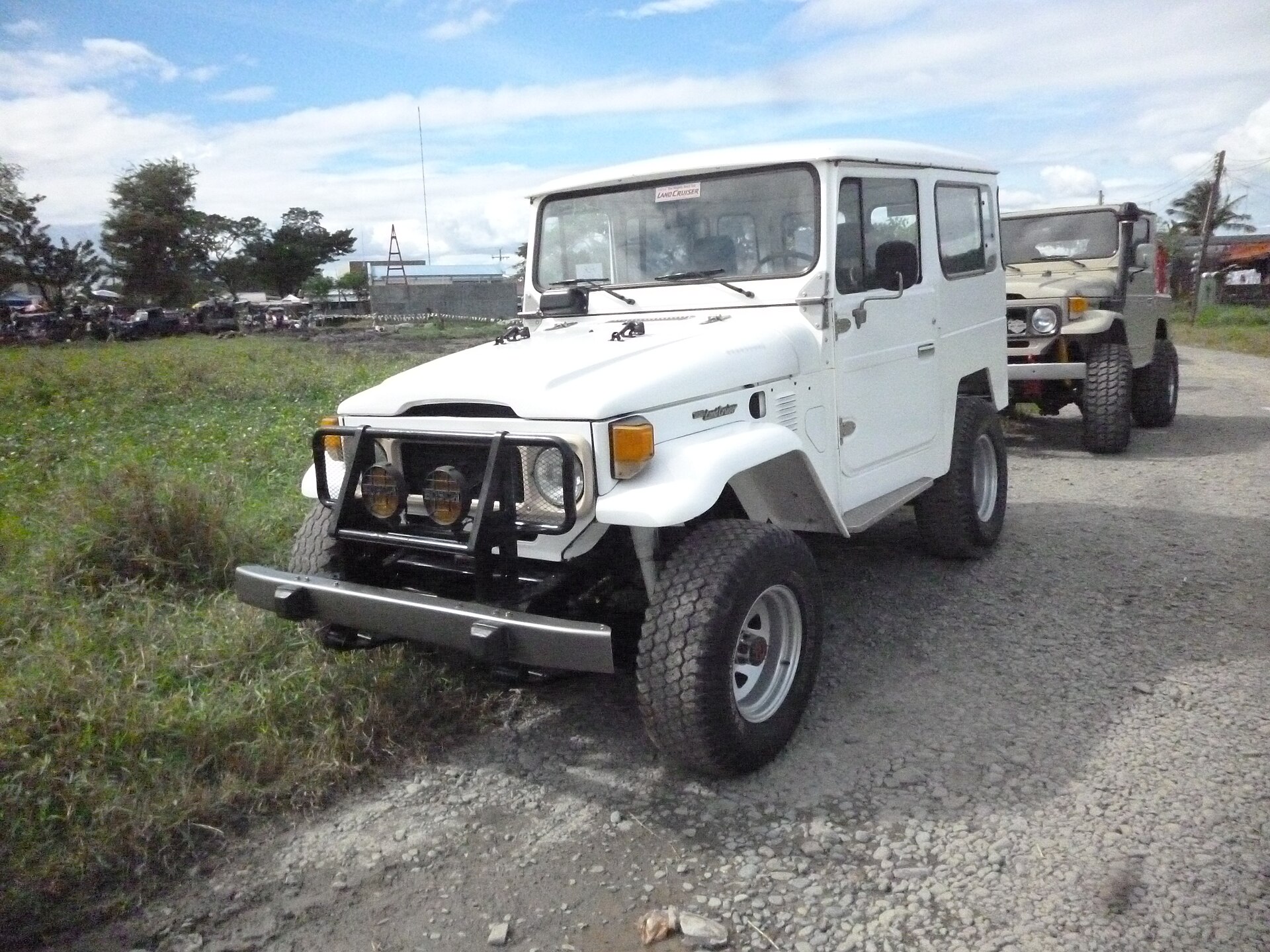
The civilian-oriented 20 Series arrived in 1955, beginning full-scale exports. Toyota’s export history places its introduction in November. The 40 Series followed in 1960. Toyota’s 2021 history table lists its sales period through October 1986 without identifying the market or production cutoff. This should not be read as a worldwide replacement date: Toyota’s Japanese vehicle history dates the succeeding 70 Series launch to November 1984.
The family developed three related branches: utility-focused heavy-duty vehicles, spacious station wagons and light-duty models combining off-road ability with everyday comfort. Toyota’s explanation of the branches describes their distinct roles.
In September 2019, Toyota announced that cumulative global sales had surpassed ten million, reporting ten million as of August 31. Its total included the Lexus models listed alongside Toyota’s Land Cruiser branches. Toyota’s sales announcement, opening paragraph and footnote 2.
Land Cruiser branches and principal series
These lists describe related branches that developed alongside one another, rather than a single sequential replacement chain. Toyota distinguishes heavy-duty, station-wagon and light-duty roles in its account of the Land Cruiser family.
Heavy-duty line (BJ, 20, 40 and 70 Series; 1951 onward)
The BJ, 20 and 40 Series established the working-vehicle lineage. The heavy-duty 70 Series succeeded the 40 with multiple wheelbases and body styles; Toyota’s Japan-specific history records its release on November 2, 1984. Toyota’s 70 Series vehicle history.
The 40 Series’ October 1986 endpoint is a sales-period entry in Toyota’s 2021 history table. Its geographic scope and relationship to production remain unspecified there, so the two dates do not establish a simultaneous worldwide changeover.
Station-wagon line (55, 60, 80, 100, 200 and 300 Series; 1967 onward)
The 55 Series began the spacious station-wagon branch in 1967. The 80 added greater luxury; Toyota unveiled the 300 in 2021. Toyota’s station-wagon history and 300 Series announcement.
Light-duty line (70 Wagon, 90, 120, 150 and 250 Series; 1985 onward)
The light-duty 70 Wagon appeared in 1985 as a derivative, distinct from the heavy-duty 70. It developed into the Prado family. The 90 Series was the first Land Cruiser with independent front suspension. Toyota’s history table, 70 and 90 Series entries.
Toyota unveiled the 250 Series on August 2, 2023, presenting it as a return to a simpler, practical Land Cruiser concept. Toyota’s world-premiere announcement. Its Japanese sales launch followed on April 18, 2024. Here, 2024 identifies that market-specific launch, rather than the unveiling date or a universal model-year designation. Toyota’s Japan launch announcement.
Sources
- Land Cruiser history — Toyota Motor Corporation
- The Land Cruiser’s 70-year history — Toyota Global Newsroom
- Land Cruiser global sales surpass ten million — Toyota Global Newsroom
- 75 Years of Toyota: Land Cruiser (70), Japanese release and vehicle history
- Toyota’s New Land Cruiser 250 Makes World Premiere — August 2, 2023
- Toyota Launches All-New Land Cruiser 250 Series in Japan — April 18, 2024