Toyota 2000GT
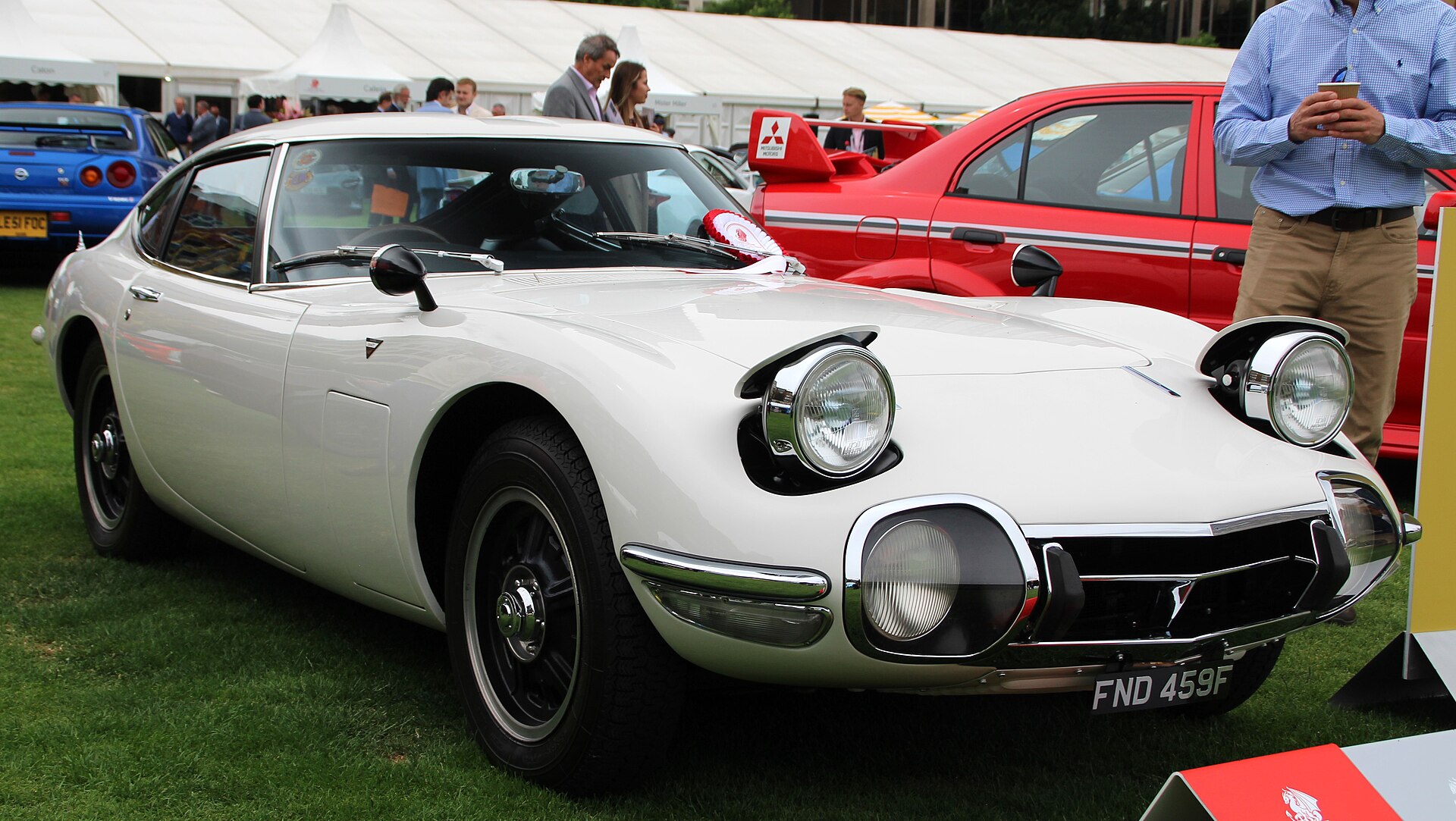
Produced from 1967 to 1970, the Toyota 2000GT was a two-seat grand tourer developed with Yamaha, which handled prototyping and production.
Development and production
Toyota launched the two-seat 2000GT grand tourer in 1967 following development with Yamaha Motor. The model remained a single generation, with production ending in 1970. Toyota’s spare-parts announcement reports 337 cars manufactured during that period. It does not explain whether prototypes or specially converted cars are included in that total, so the counting scope remains unresolved.
Toyota entrusted prototyping and production to Yamaha because the small production run and careful finishing were unsuitable for its mass-production lines. This division of work is described in Toyota’s sports-car development history.
Engineering
The compact cabin, long bonnet and fastback roof sat above an X-shaped backbone frame. Toyota’s vehicle details identify the displayed specifications as representative of the MF10, including its 2.0-litre inline-six. Double-overhead-cam (DOHC) means two camshafts above the cylinders operate the valves.
The existing mechanical description covers:
- A 2.0-litre DOHC inline-six driving the rear wheels.
- A five-speed manual transmission.
- Independent double-wishbone suspension.
- Four-wheel disc brakes.
- Rack-and-pinion steering.
- Magnesium-alloy wheels.
- Retractable headlamps.
The engine specification describes the representative MF10, while Toyota’s spare-parts announcement explicitly limits its reproduced transmission parts to the five-speed manual. These references do not establish that every example had this engine-and-transmission combination.
Endurance records and film appearances
Before the production launch, a 2000GT set three world and 13 international endurance records during speed trials. Toyota’s sports-car development history documents the record attempt and its results.
Specially converted open cars appeared in the Japanese sequences of the 1967 James Bond film You Only Live Twice. Toyota’s vehicle history identifies them as prototypes converted to open-top form. Their bodywork was a film conversion, distinct from the production coupé specification.