Ford Model T
The Ford Model T (1908–1927): its engineering, expanding affordability and role in moving-assembly-line production.
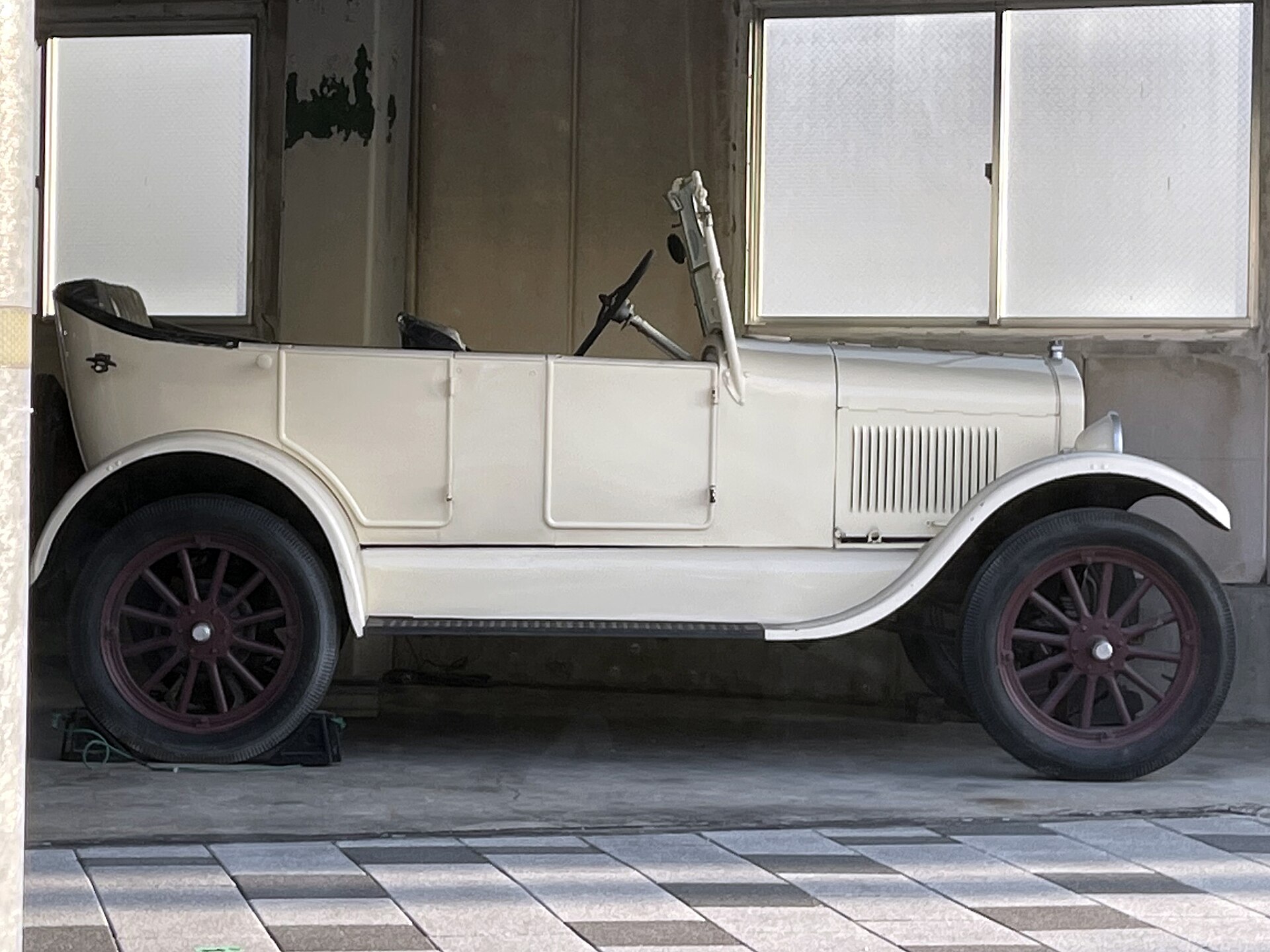
Introduction
Introduced in 1908, the Model T was designed for affordability, durability and straightforward operation. Ford dates shipment to its first customer to 1 October 1908; this establishes a shipment date rather than a confirmed delivery date. Ford’s Model T history.
Engineering and specification scope
Ford’s model history highlights extensive use of vanadium steel and a removable cylinder head that simplified access for servicing. These are general design characteristics, rather than a complete specification for every version. Ford’s Model T history.
For a documented example, The Henry Ford’s catalogue specifies its 1914 Model T touring car, made at Highland Park, Michigan, with a 177-cubic-inch (approximately 2.9-litre) inline-four, 20 horsepower at 1,600 rpm and a two-speed manual transmission. These figures describe that example and should not be treated as specifications for every year or market. The Henry Ford, artifact 71.82.1, Specifications.
Ford’s 1919 manual explains the planetary transmission: gears stay engaged while rotating around a central axis, and bands hold selected parts stationary to change the drive ratio. The manual describes low and high forward speeds and reverse. Ford Manual, answers 69–70.
The same manual documents thermosiphon cooling: heated water rises through the engine to the radiator, cools and returns, circulating without a water pump. It also describes cars both with and without an electric starter, establishing availability by 1919 without implying universal fitment. Cars without one used a starting handle. This evidence comes from Ford’s 1919 Detroit-published manual; it does not establish cooling arrangements or starter equipment for every production year and overseas market. Ford Manual, answers 7 and 36.
Moving-assembly-line production
Ford introduced the moving automobile assembly line at Highland Park, Michigan, in October 1913. Increased output helped the company lower prices and broaden access to car ownership. Ford’s Highland Park history.
As the process developed, chassis assembly labour time fell from about 12.5 hours to about 1.5 hours. Henry Ford’s account gives 12 hours 28 minutes for stationary assembly and 1 hour 33 minutes after further improvements, including raising the line in early 1914. These are chassis assembly measurements, not the total time needed to manufacture an entire vehicle and all its components. My Life and Work, chapter V.
Production history, 1908–1927
This site groups the Model T’s 1908–1927 production history as one generation. That is an editorial classification, not a claim that its specifications remained unchanged throughout production.
Colour policy
Ford’s historical overview dates the black-only offering to 1914–1925, with other colours available before and after. The article does not specify geographic exceptions, so this date range should not be assumed to establish an identical policy in every market. Ford’s Model T history, colour-policy paragraph.
End of production
Ford’s overview records more than 15 million Model Ts built and sold and a ceremony marking the end of production in May 1927. It does not provide a plant-by-plant chronology or establish the final assembly date in every country. Ford’s Model T history, production-total paragraph.
Sources
- The Model T — Ford Motor Company
- Ford company timeline — Ford Motor Company
- Highland Park Plant legacy — Ford Motor Company
- Engines Exposed: 1914 Ford Model T — The Henry Ford
- 1914 Ford Model T Touring Car — The Henry Ford, artifact 71.82.1
- Ford Manual for Owners and Operators of Ford Cars and Trucks (1919) — Ford Motor Company
- My Life and Work — Henry Ford with Samuel Crowther, chapter V