Citroën DS
The front-wheel-drive DS and related ID family combined distinctive body design with hydropneumatic comfort, becoming a defining Citroën of the post-war era.
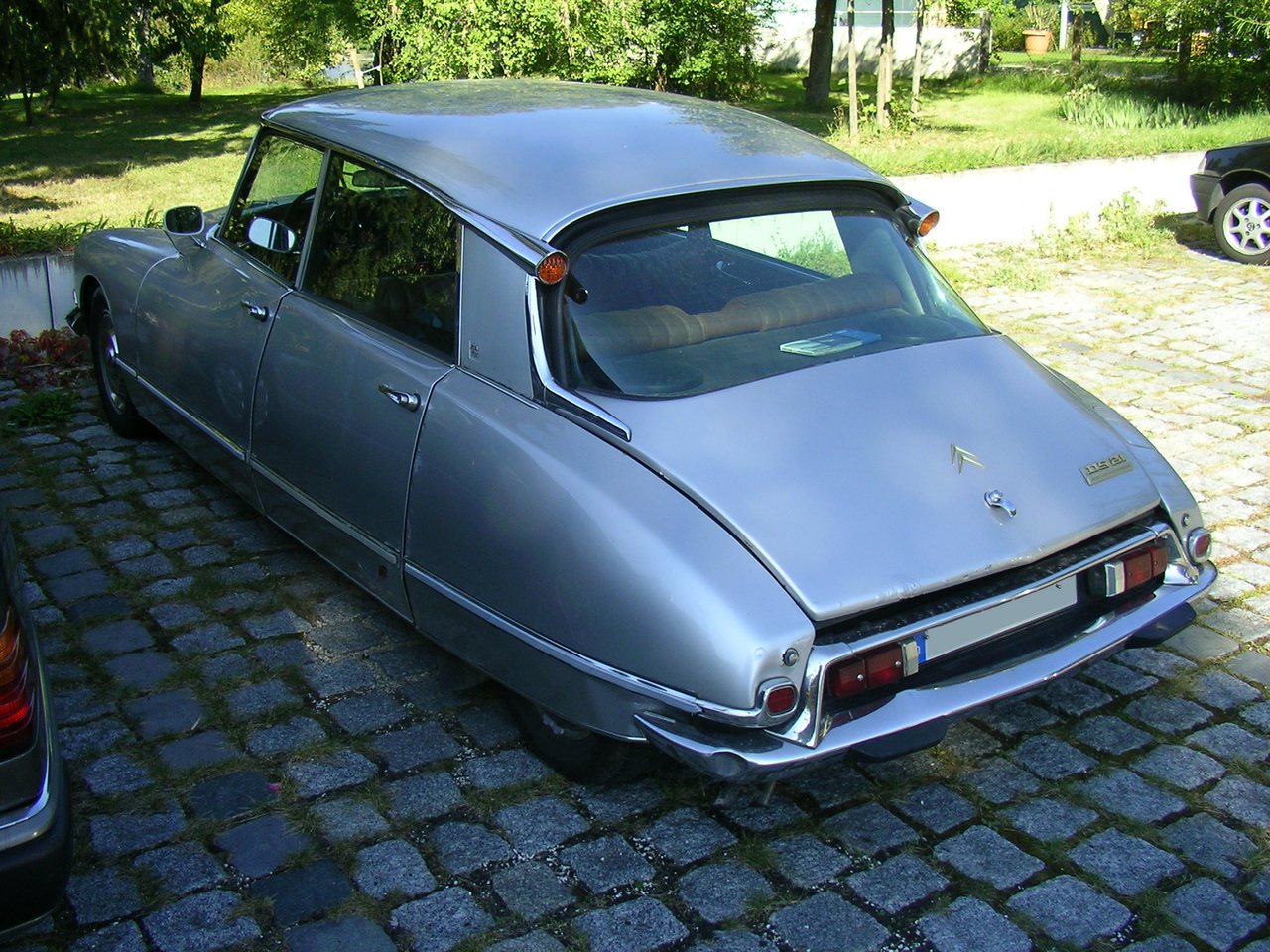
Overview
The DS was Citroën’s large passenger-car family of 1955–1975. It succeeded the Traction Avant, combining front-wheel drive with a streamlined body and an unusually extensive hydraulic system. This record includes the related, less expensive ID range. DS 19, DS 20, DS 21 and DS 23 are model designations within that evolving family, rather than four successive generations. Pallas identifies an equipment level; Break identifies an estate body. Citroën Origins groups these versions within the same history.
The DS 19 appeared at the Paris Motor Show on 6 October 1955. Its development grew out of the VGD programme begun in 1938: André Lefèbvre contributed vehicle engineering, Paul Magès developed the hydraulics, and Flaminio Bertoni and his team shaped the body. Their combined work made comfort, aerodynamics and control central to the car’s identity. DS Automobiles’ heritage history documents the programme and launch.
Engineering and the ID relationship
The DS drove its front wheels through a four-speed gearbox. In the original hydraulic arrangement, the driver selected the gear but hydraulic mechanisms operated the clutch and gearchange; there was no clutch pedal. This semi-automatic system should be distinguished from the later fully automatic transmission. Independent, self-levelling hydropneumatic suspension supported all four wheels. The DS also used hydraulic steering assistance and powered braking, with inboard front discs and rear drums. Its characteristic rubber brake control differed from a conventional pedal. Citroënët’s technical history separates these systems by version.
Announced at the 1956 Paris show, the ID 19 offered a less costly route into the family. It retained the body architecture and hydropneumatic suspension, but its original specification used a conventional clutch and manual gearchange, unassisted steering and a simpler braking system. Trim and instrumentation were also simplified. Later ID derivatives gained equipment and different engines, so this initial specification does not describe every ID-based car. Citroënët’s ID history explains the distinction.
Engines and transmissions
The production DS used petrol inline-four engines. The main saloon engine changes below are dated by calendar-year introduction, rather than assuming that every market’s model year began at the same time.
| Designation | Engine development | Place in the range |
|---|---|---|
| DS 19 | 1,911 cc from 1955; replaced by a shorter-stroke 1,985 cc unit in 1965 | The original designation continued after the capacity change. |
| DS 20 | 1,985 cc from 1968 | Replaced the DS 19 designation with increased output, without a new body generation. |
| DS 21 | 2,175 cc from 1965; electronic injection added in 1969 | A larger-engine offering alongside the smaller DS; injection was a distinct version. |
| DS 23 | 2,347 cc from 1972 | Replaced the DS 21, with carburettor and injection versions. |
The engine relationships are documented in Citroënët’s technical tables. The ID-derived range later used the D Spécial and D Super names. The D Super 5 combined the 2,175 cc engine with a five-speed manual gearbox; its badge did not make it a DS 23. See Citroënët’s model evolution.
Conventional manual DS versions supplemented the hydraulic gearchange. Five-speed manual and three-speed Borg-Warner automatic options appeared later, with availability dependent on version. Engine capacity alone therefore does not establish transmission, fuel system or performance. DS technical history.
Body styles and equipment
The four-door saloon formed the core of the range. Pallas, introduced in 1964, added more elaborate trim and comfort equipment. Prestige was a chauffeur-oriented saloon with a division between front and rear compartments. Estate derivatives appeared in 1958, according to the manufacturer’s retrospective.
The ID-based Break combined a lengthened, strengthened rear body with modified braking and gearing for load carrying. Family, commercial and ambulance configurations served different purposes; their seating layouts should not be treated as one universal specification. The estate was marketed as Safari in Britain and Wagon in the United States. Although related to the ID, it used DS-type braking, illustrating why saloon specifications cannot simply be transferred to the estate. Citroënët’s Break account.
Henri Chapron built the factory-approved cabriolets sold through Citroën dealers, alongside his separate coachbuilt creations. The approved open car followed saloon mechanical and styling developments. American-market cabriolets had their own lighting details, including sealed-beam headlamps and different indicator arrangements. Citroënët’s usine cabriolet history.
Styling changes and market differences
The nose was revised in 1962 and again in 1967. The latter change introduced four lamps behind glazed covers on the familiar European specification, with steering-linked inner lamps on suitably equipped versions. US-market cars instead used uncovered, fixed lamps. These are facelifts and market specifications within the same model family. Citroënët’s evolution chronology.
Slough-built British cars differed in more than steering position. They used 12-volt electrics from the outset, Lucas lighting and locally specified interiors. British IDs could have a wooden dashboard and leather upholstery, giving them a different market position from the plainer French ID. French-built cars subsequently supplied to Britain also retained some national-market details. Assembly country and sales market therefore both matter when identifying a particular car. Citroënët’s British DS and ID history.
Production and legacy
Quai de Javel in Paris was the main production centre. The manufacturer’s history records assembly in Britain and Belgium from 1956 and South Africa from 1959. It dates the last Javel DS to 24 April 1975: a DS 23 Pallas with electronic injection. That factory milestone should not be used as a universal delivery date for every body style and market. DS production history.
The CX succeeded the DS in Citroën’s large-car line. The DS’s lasting importance lies in bringing its distinctive shape and interconnected hydraulic systems into series production, across cars ranging from practical estates to luxurious saloons. Its changing specifications show sustained development of one design rather than repeated replacement by new generations. Citroënët’s model history.